

Could a vitamin deficiency thyroid connection be behind your symptoms? Vitamins are essential for maintaining your thyroid health. However, many patients suffering from thyroid disorders are often found to be vitamin deficient, especially in vitamin D. Checking your thyroid levels is critical for thyroid health. Let's discuss vitamin deficiency thyroid health.

🌿 ARTICLE SNAPSHOT
Article Highlights
💡 Quick Overview: Explore how nutrient status may intersect with thyroid health, which symptoms deserve attention, and why laboratory testing should guide any supplement plan.
🎯 Main Topic: The relationship between vitamin and mineral deficiencies, thyroid-hormone production, and overall thyroid function.
👥 Best For: Anyone experiencing persistent fatigue, hair changes, dry skin, constipation, unexplained weight changes, or an existing thyroid condition.
✨ You'll Learn:
- How thyroid-stimulating hormone, T4, and T3 work together?
- Why vitamin D, vitamin B12, iodine, selenium, iron, and other nutrients are discussed in thyroid care?
- Which symptoms may justify thyroid-function and nutrient testing?
- How balanced nutrition, digestive health, medication timing, and professional care fit into thyroid support?
🌱 Why It Matters: Nutrient deficiencies may coexist with thyroid disease, but symptoms alone cannot identify either problem, and an association does not prove that a deficiency caused the condition. Avoid high-dose "thyroid support" supplements without testing because too much iodine can also disrupt thyroid function, while iron and some other supplements may interfere with thyroid medication
Jump to:
🦋 Thyroid Vitamins And Health
Most people are unaware that vitamin D and your thyroid levels are interrelated.
A few symptoms of thyroid disorders include hair loss, loss of energy, sudden weight gain and difficulty losing it, dry skin, constipation, and increases in cholesterol.
Your thyroid is mainly responsible for producing or discharging hormones that help regulate the rest of your body. Here is a general explanation of how your thyroid levels and hormones work together.
Your body contains a TSH (Thyroid Stimulating Hormone). Your doctor usually measures this when you get a thyroid checkup.
The TSH comes from your brain and goes to your thyroid glands, signaling them to produce T4, also known as your inactive thyroid hormone.
The T4 travels within your tissues and your bloodstream until it gets converted into T3, your active thyroid hormone.
Then T3 gets into your cells to reach your nuclear receptor to increase your metabolism.
💬 Let's Talk Thyroid Vitamins
The vitamins that are found to be most deficient among patients who suffer from any thyroid disorder are vitamins B-12, D, A, B2, and C. The deficiency of vitamin D is found to be one of the most influential in thyroid disorders.
Vitamin D
Vitamin D helps regulate your immune system.
Studies have found that people with autoimmune thyroid disease, like Hashimoto's, often have lower vitamin D levels, though it's not yet clear whether low vitamin D is a cause or a result.
Vitamin D also plays a role in insulin sensitivity. Ask your doctor to check your levels before supplementing, since too much vitamin D can be harmful too.
🧡 Other Vitamin Deficiencies
Several other nutrients matter for your thyroid:
Iodine - Your thyroid needs iodine to make thyroid hormone. Both too little and too much can cause problems, according to the American Thyroid Association.
Selenium - Helps convert T4 into active T3 and helps protect the thyroid from oxidative damage.
Iron - Low iron can affect thyroid hormone production, and iron deficiency is common in women.
Vitamin A - Plays a role in thyroid hormone metabolism.
Vitamin B12 - B12 deficiency is more common in people with Hashimoto's and can cause fatigue and nerve problems, so it's worth having it checked.
Vitamins are important players in your body's functioning. Find out what your baseline should be. Talk with your doctor about supplements or vitamins to ensure you are getting all the vitamins your body needs to stay healthy! Vitamins are important for your thyroid health.
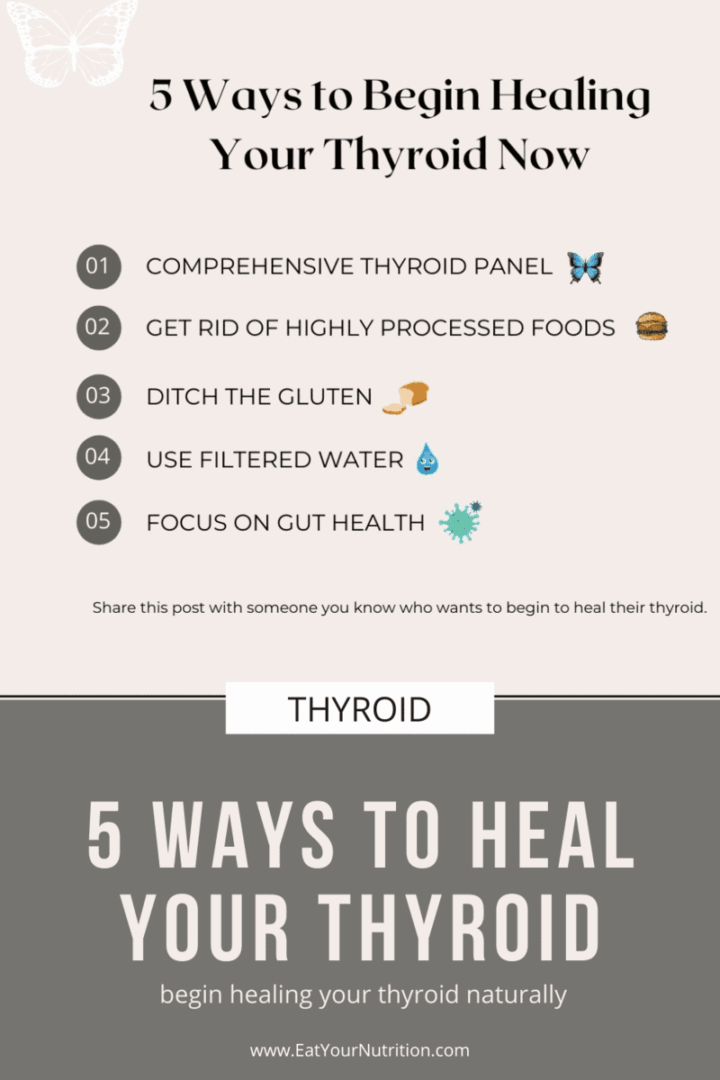
5 Ways to Support Your Thyroid Health
1. Comprehensive Thyroid Panel
First, begin by having your doctor do a comprehensive thyroid panel, not merely testing the TSH levels.
So, by properly understanding your current thyroid levels, you and your doctor can come up with a plan to balance your hormone levels. You can work in conjunction with a certified Nutritional Therapy Practitioner and doctor to use conventional and non-conventional approaches to healing your body.

2. Get Rid Of Highly Processed Foods
Begin by getting rid of highly processed foods. Focus on eating nutritious foods, including fruits, vegetables, and healthy fats.
Most processed foods are also low in fiber. Increasing your dietary fiber will also benefit your digestive system.
High-fiber meals can affect how well thyroid medication is absorbed. If you change your fiber intake a lot, take your medication as directed and talk to your doctor. Focus on complex carbohydrates, like sweet potatoes.
3. Ditch The Gluten
Likewise, consider ditching gluten products for naturally gluten-free foods.
Celiac disease is more common in people with autoimmune thyroid conditions like Hashimoto's and Graves' disease, so ask your doctor about screening if you have gut symptoms (1).
4. Use Filtered Water
Importantly, I highly suggest using filtered water.
For instance, tap water can contain fluoride, chlorine, bromide, lead, perchlorate, BPA, and nitrates. First of all, perchlorate, a chemical found in rocket fuel, is not something that should be in our drinking water. It can seriously impact your thyroid hormones.
Studies have also shown that fluoride is associated with underactive thyroid levels (2). Chlorine and bromine can deplete the body of iodine.
Moreover, proper iodine levels are one of the keys to thyroid health. BPA has been shown to have an antagonistic effect on the thyroid receptor (3).
5. Focus On Gut Health
Above all, learn how to support your gut health. The thyroid-gut connection is real. The thyroid gland can have a significant impact on your gastrointestinal system.
For example, digestive disturbances can be caused by increased motility and decreased motility, depending on hypothyroidism or hyperthyroidism.
In other words, too much or too little thyroid hormone leads to the body's functions slowing down or speeding up. Increased motility leads to diarrhea, and decreased motility leads to constipation.
Dysbiosis is also common in thyroid disorders (1). Dysbiosis is an imbalance of bacteria in the gut. The goal should be to balance the hormones and gut health.
To improve your health, consider trying out one of my nutrition and wellness programs.
Clear Radiant Skin: 6-Week Nutrition Program
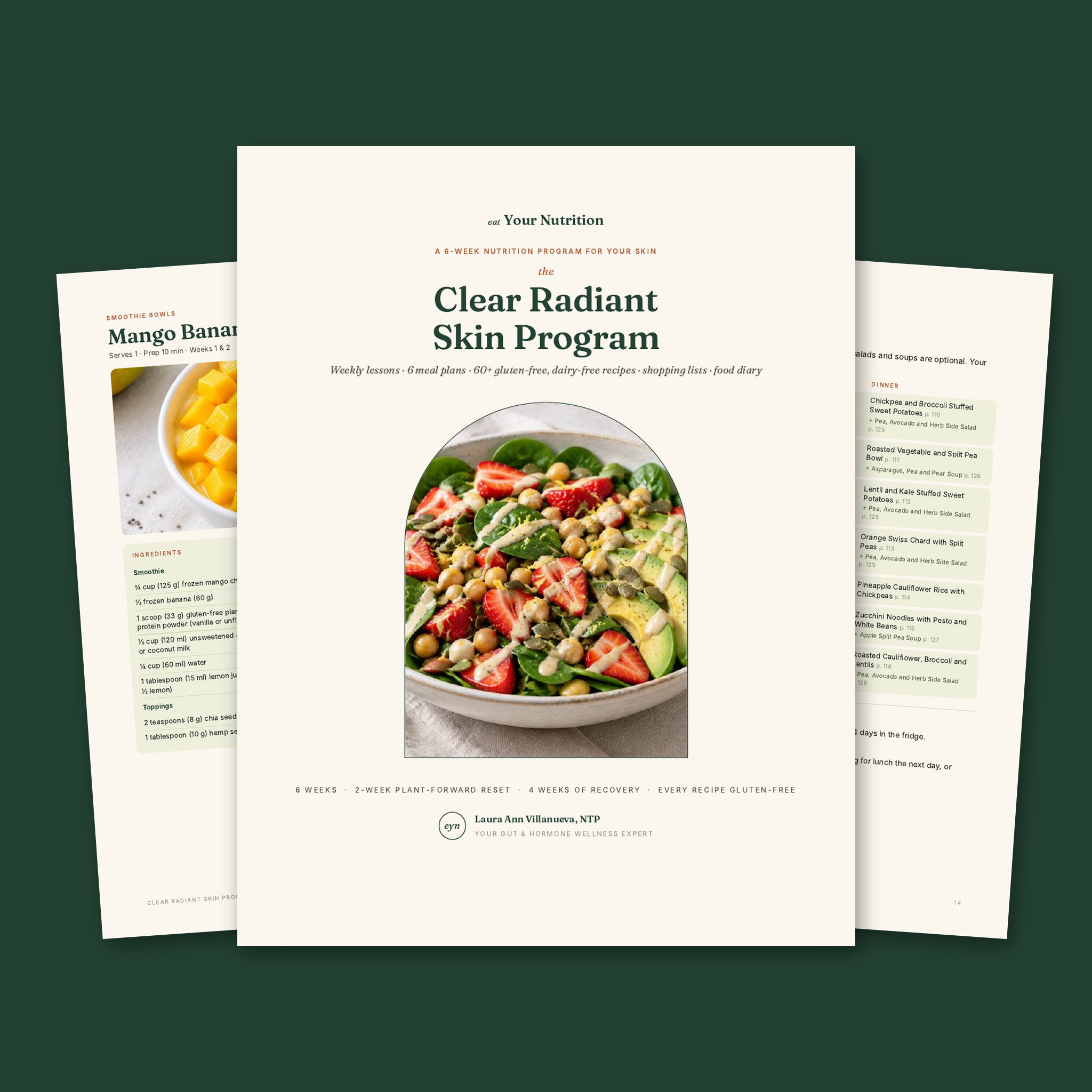
Women who want to learn how food, sleep, stress and skin care fit together, alongside their regular skin care.
🧡 Balanced Hormones - Clear Radiant Skin Program
So, if you're interested in getting healthy, restoring your body and mind, and boosting your energy, check out my Balanced Hormones Program. In the program, you get a ton of delicious, satisfying recipes, as well as strategies that will help you regain control of your health.
Eat Your Nutrition Online Programs
- Balanced Hormones - Clear Radiant Skin Program
- Reset & Renew Nutrition Program
- Restore Your Gut Health Program]
- A Fresh Start Healthy Weight Loss Program
🗣️ Let's Discuss Vitamin Deficiency Thyroid Health!
I would love to hear what your experience has been with your thyroid health. Have you noticed any improvement when you focused on increasing foods rich in vitamins for thyroid support? Let me know in the comments below.
You can also connect with me @EatYourNutrition on Instagram. I love seeing your photos.
📚 References
1. Knezevic J, Starchl C, Tmava Berisha A, Amrein K. Thyroid-Gut-Axis: How Does the Microbiota Influence Thyroid Function?. Nutrients. 2020;12(6):1769. Published 2020 Jun 12. doi:10.3390/nu12061769
2. Kheradpisheh Z, Mirzaei M, Mahvi AH, et al. Impact of Drinking Water Fluoride on Human Thyroid Hormones: A Case- Control Study. Sci Rep. 2018;8(1):2674. Published 2018 Feb 8. doi:10.1038/s41598-018-20696-4
3. Sokal A, Jarmakiewicz-Czaja S, Tabarkiewicz J, Filip R. Dietary Intake of Endocrine Disrupting Substances Presents in Environment and Their Impact on Thyroid Function. Nutrients. 2021;13(3):867. Published 2021 Mar 6. doi:10.3390/nu13030867




Comments
No Comments