

Want to learn how to make sauerkraut? It is so much fun, but it can also be daunting but I make it simple to learn how. You don't want to do the wrong thing and make yourself sick, but you definitely want the amazing benefits that homemade ferments have to offer. Fermentation of cabbage into an easy basic sauerkraut recipe is so easy to learn.

📋 Recipe Snapshot
Quick Recipe Facts
⏱️ Ready In: 15 minutes of preparation, plus 2 to 4 weeks to ferment.
👩🍳 Skill Level: Easy beginner fermentation.
🥬 Flavor: Tangy, salty, pleasantly sour, and crunchy with optional garlic, ginger, or fennel.
🌿 Diet: Gluten-free, dairy-free, vegan, vegetarian, and made with simple whole-food ingredients.
🍽️ Best For: Adding to bowls, sandwiches, salads, sausages, or meals that need a bright fermented flavor.
❄️ Make Ahead: Ferment for 7 to 10 days for a milder flavor or 2 to 3 weeks for classic tangy sauerkraut. Once refrigerated and kept submerged in brine, it can remain fresh for 3 to 6 months or longer.
🌀 Harmony Highlight: Fermenting fiber-rich cabbage creates a flavorful food with beneficial live cultures that can add variety to your gut-supportive eating rhythm. Always keep the cabbage fully submerged during fermentation.
Jump to:
- Quick Recipe Facts
- Why You'll Love This Fermented Sauerkraut Recipe?
- 🥬 The Basics Of Fermentation: Salt + Vegetables + Environment
- 🧡 Learn How To Make Sauerkraut Recipe
- 📖 Recipe Card
- 🤔 FAQ - Common Questions Fermentation Time & Storage
- Didn't find the answer you're looking for?
- 📚 Additional Resources
- ❤️ You Might Also Love These
- 😀 Let's Discuss How To Make Sauerkraut!
- 💬 Comments
Fear not, fermentation isn't nearly as scary as it seems. The remarkable thing about fermenting your own food is that you can tell immediately when something's not right. It's not a guessing game like traditional canning.
Once you get the hang of it you'll be hooked. Producing your own ferments is an art because no matter what you do every batch will turn out unique from the last.
Why You'll Love This Fermented Sauerkraut Recipe?
- Gut Health Benefits - Improved digestion, enhanced nutrient absorption and bioavailability.
- Weight Management Support - Helps regulate blood sugar levels, detoxification and weight management.
- Reduce Inflammation - Probiotic bacteria enhance the diversity of gut microbes and decrease signs of inflammation.
- Boosted Immunity - Helps strengthen the function of the immune system and has potential for reduction of food allergies.
This fiber rich cabbage recipe is packed full of flavor and good for you ingredients.
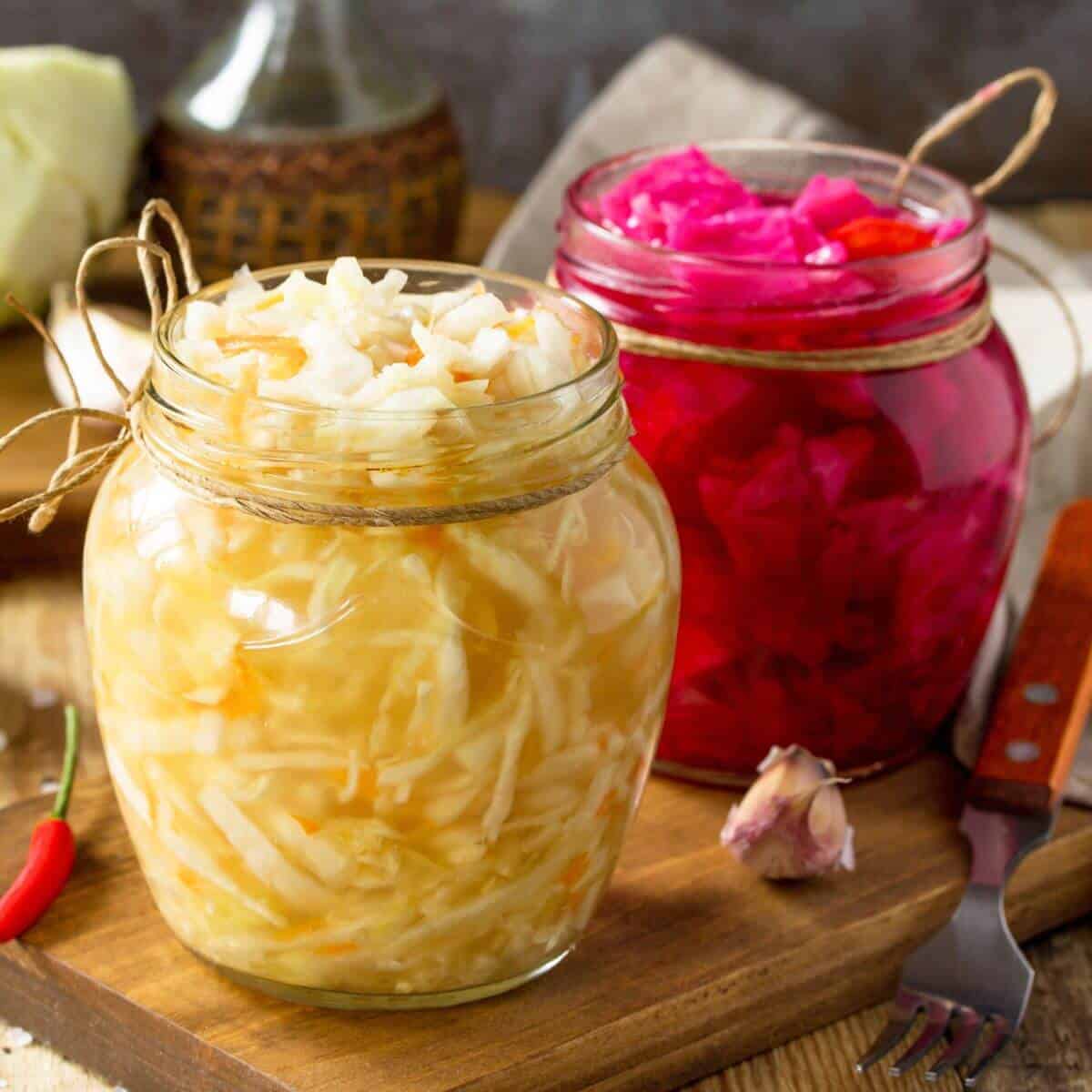
🥬 The Basics Of Fermentation: Salt + Vegetables + Environment
The role of salt is both protective and purposeful. It protects against harmful bacteria, while also stimulating osmosis. To make ferments like sauerkraut, salt is needed to draw the liquid out of the cabbage. This is so it has a brine to create magic in.
A common mistake beginners make is not to leave enough liquid above the vegetables to protect them from the elements of the outside world. I like to make a separate brine of 1 teaspoon sea salt to one cup of water. Then add some on top of my packed down vegetables.
Every fermented food relies on the same principles of salt, vegetables, and an environment free from oxygen, so those healthy bacteria can grow.
🧡 Learn How To Make Sauerkraut Recipe
Learn how easy it is to make a gut healthy sauerkraut recipe.
Send This To My Inbox
📖 Recipe Card

Basic Fermented Sauerkraut Recipe
Equipment
Ingredients
- 1 head cabbage (Shite or red) or (can substitute with shredded carrots)
- 3 tablespoon sea salt (Non-iodized salt)
- water (Filtered is best)
Spices
- garlic, fresh
- ginger, fresh
- fennel seed

Instructions
- Chop the cabbage finely, you can use a food processor, a mandolin, or hand.
- Liberally coat the cabbage with salt and let it sit for a few minutes.
- Mix, pound and squeeze the cabbage to get as much water out of it as possible.
- This is when you would add your other vegetables and spices.
- Stuff mixture into mason jars. Push it down as much as possible to get rid of any air bubbles and make the salty brine rise to the surface. You want at least an inch of water above your vegetables at all times.
- You can use a weight to keep the kraut submerged. Some people used the actual "butt" end of the cabbage itself, a clean rock, or you can get fancy and buy a proper fermentation weight.
- Check your kraut every few days to ensure it's still submerged.
- Let it ferment to your liking. I usually let mine go for 2 weeks to a month before popping it in the fridge.
🌿 The Harmony Method™ Pillars Supported 🌿
Rotation | Gut-Hormone-Mood | Flavor Infusion | Mindful Meal Mapping
Nutrition
The information shown is an estimate provided by an online nutrition calculator. Modify as needed and enjoy.
©EatYourNutrition. Content & photos are copyright protected. I love when you share this recipe with others, but please make sure you give credit to this site. Copying, pasting, & posting entire recipes onto social media is prohibited.
Share on FacebookSend This To My Inbox
LEAVE A RATING AND COMMENT
Please leave a rating and comment letting us know how you like this recipe.
🤔 FAQ - Common Questions Fermentation Time & Storage
These FAQs should help address any common concerns or questions you may have about making this homemade sauerkraut recipe.
How long does sauerkraut ferment?
Homemade sauerkraut typically ferments at room temperature for 2-3 weeks, depending on your environment and taste preferences.
7-10 days - Mild flavor with a light crunch.
2-3 weeks - Classic tangy sauerkraut with well-developed probiotics.
3-4+ weeks - Deeper sour flavor and softer texture
Fermentation happens faster in warmer kitchens and slower in cooler temperatures. The beauty of homemade sauerkraut is that you can taste it as it ferments and decide when it's perfect for you.
When should you move sauerkraut to the fridge?
Once your sauerkraut reaches the flavor you love, transfer it to the refrigerator. Refrigeration slows down fermentation and helps preserve both texture and beneficial bacteria.
Be sure the sauerkraut stays fully submerged in its brine, as this protects it from spoilage and keeps it fresh longer.
How long does homemade sauerkraut last in the fridge?
Properly fermented and stored sauerkraut can last:
3-6 months (or longer) in the refrigerator.
Sometimes up to 1 year when kept cold, sealed, and submerged in brine.
The flavor may continue to slowly develop over time, which is completely normal. As long as it smells fresh and pleasantly tangy (not rotten or moldy), it's safe to enjoy.
Storage Tip - Always use a clean utensil when serving to avoid introducing unwanted bacteria into the jar.
Didn't find the answer you're looking for?
Ask AI to answer based on this specific post:
📚 Additional Resources
Also, for further reading and guidance on how to go about treating the root causes of gut inflammation, consider exploring the following resources.
🦠 Restore Your Gut Health Program

The Restore Your Gut Health Fundamentals program will help you finally fix your gut health issues and reclaim the life you deserve.
If you're interested in getting healthy, restoring your digestion, and boosting your energy, check out my comprehensive program Restore your Gut Health. In the program, you get a ton of delicious, satisfying recipes, as well as strategies that will help rebuild your intestinal flora.
Or join me on my Facebook page, where I'll share more information, tips, and recipes to help you live a happier, healthier life.
❤️ You Might Also Love These
Looking for other gut healing recipes like this? Try these:




😀 Let's Discuss How To Make Sauerkraut!
Fermentation of cabbage into an easy sauerkraut recipe is easy to learn. I hope you learned how easy it is to make fermented sauerkraut. Therefore, experiment with different vegetables. This is because the fermentation of cabbage or carrots into a delicious easy sauerkraut recipe is pretty easy to learn.
You can also connect with me @EatYourNutrition on Instagram. I love seeing your photos. #EatYourNutrition #LauraVillanueva
Comments
No Comments